Skip to content
  • Visit
    • TOURS
    • Accessibility
    • HOURS & LOCATION
    • BECOME A MEMBER
    • ADMISSION
    • GIFT SHOP
  • Exhibits
    • The German Immigrant Experience
    • Play On! German Immigrants and the Quad Cities’ Musical Legacy
    • Shaped By Immigrants: Celebrating 250 Years of the United States
    • Past Exhibitions
  • Learn
    • GAHC From Home
    • Internships
    • Volunteer
    • Resources
    • Translation Services
    • Book Discussions​
    • Travel
    • Stammtisch
  • Events
  • About
    • About Us
    • Collections
    • DEAI Statement
    • Staff
    • Employment Opportunities
    • Newsletter
    • Contact Us
    • Media Kit
  • Private Events
  • Donate
  • Visit
    • TOURS
    • Accessibility
    • HOURS & LOCATION
    • BECOME A MEMBER
    • ADMISSION
    • GIFT SHOP
  • Exhibits
    • The German Immigrant Experience
    • Play On! German Immigrants and the Quad Cities’ Musical Legacy
    • Shaped By Immigrants: Celebrating 250 Years of the United States
    • Past Exhibitions
  • Learn
    • GAHC From Home
    • Internships
    • Volunteer
    • Resources
    • Translation Services
    • Book Discussions​
    • Travel
    • Stammtisch
  • Events
  • About
    • About Us
    • Collections
    • DEAI Statement
    • Staff
    • Employment Opportunities
    • Newsletter
    • Contact Us
    • Media Kit
  • Private Events
  • Donate

Gold Coast Home Tours

September 15, 2024 |
 12:00 pm -
 4:00 pm
$15

Learn More

A variety of homes open their doors to welcome guests during Davenport’s Gold Coast/Hamburg Historic District Home Tour, Saturday and Sunday, September 14th & 15th

Five homes, including one that will be first time on tour, welcome the public during the 2024 Gold Coast – Hamburg Historic District Home Tour.

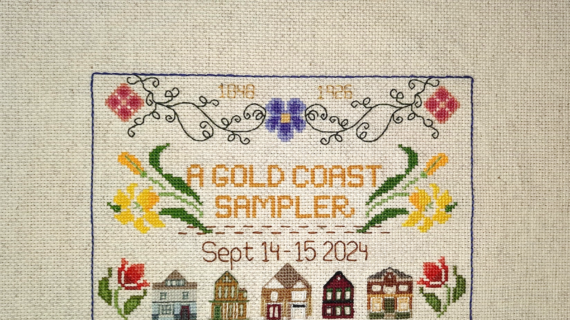
The single family houses on tour were built over five decades, from c 1873 to 1915.  Several were gifts from Gold Coast fathers to daughters. They range in design from Foursquare to Italianate to Queen Anne to McClelland Style homes. Across their 150-year time span, one was converted to apartments and another had space carved out to create a duplex unit. Four have been rehabilitated and restoration is underway in the fifth. Architectural features inside the homes reflect the prevailing designs, preferences, and pocketbooks of their original owners. It is from this variety that “Gold Coast Sampler” was chosen as this year’s theme.

In addition to historic homes, “American Pickers” Robbie Wolfe will also welcome the public to view his fantastic collection of antiques and advertising memorabilia located in the former Carl Cleve and Son building at 330 W 5th St.

Tour goers will also be able to enjoy sneak peek into the new Project Renewal building being constructed on Warren Street and help the group celebrate its 50th year of extraordinary service to children and families.

Once again, two buildings that were brought back from vacant/deteriorated condition, the 1861 German American Heritage Center/Miller Hotel and the 1868/1878 Jipp Home & Grocery, will welcome visitors during the tour.

To celebrate the tour, Gold Coast resident Meredith Muskovich has created a “Gold Coast” themed sampler commemorating this year’s tour and the houses on view. Tour goers will be able to purchase tickets for a chance to win the original framed sampler.

Dates: Saturday and Sunday, September 14th/15th, 12N – 4PM.

Tickets: Adults $15.00. Children under 12 free when accompanied by an adult. Tickets for sale at all tour homes and the German American Heritage Center and the Jipp Home & Grocery on day of tour. Payment is in cash or check. Visitors may begin tour at any stop.

Sampler raffle tickets: $5 per ticket or $20 for five tickets. Tickets on sale at the Meier House, 519 W. 8th Street.

Transportation and Parking: Ample parking is available along all neighborhood streets and in the parking lot on the north side of 5th Street between Western Avenue and Scott Street.  Limited shuttle service will be available, beginning from the parking lot and going to all stops during tour hours.

Locations on Tour: See the image gallery and list of addresses on their website.

Learn more here.

For more information contact:
Sara Bartholomew   [email protected]      563-322-8911
Marion Meginnis      [email protected]    309-781-9253

  • Add to Google Calendar
  • Add to iCalendar
ON INSTAGRAM
  • Follow Us!

German American Heritage Center and Museum

germanamericanheritagecenter

1,407 1,787

Museum exploring the German immigrant experience and history of Davenport and Iowa!

Open
In 1994, a few Quad Cities residents looked at an abandoned building and saw something others didn’t: a place full of stories worth saving. Because of them, this space became a museum, a gathering place, and a home for shared history.

After 15+ years of work and countless volunteer hours, they saved it. They built a place for stories, culture, and community. Last year alone, we connected with over 3,000 students, families, and community members through programs, events, and celebrations.

This space exists because people believed it mattered and showed up.
Help us keep it going.

Every gift helps keep this space open, active, and rooted in community. Give through Birdies for Charity by July 1st to maximize your impact.

You can give online today at https://birdiesforcharity.com/donate?charity=1002# 
You can also fill out a pledge card at the museum or send a check to Birdies for Charity with Bird #1002.

In 1994, a few Quad Cities residents looked at an abandoned building and saw something others didn’t: a place full of stories worth saving. Because of them, this space became a museum, a gathering place, and a home for shared history.

After 15+ years of work and countless volunteer hours, they saved it. They built a place for stories, culture, and community. Last year alone, we connected with over 3,000 students, families, and community members through programs, events, and celebrations.

This space exists because people believed it mattered and showed up.
Help us keep it going.

Every gift helps keep this space open, active, and rooted in community. Give through Birdies for Charity by July 1st to maximize your impact.

You can give online today at https://birdiesforcharity.com/donate?charity=1002#
You can also fill out a pledge card at the museum or send a check to Birdies for Charity with Bird #1002.
…

Open
🍻 Need a Father's Day Gift? 

We have unique items for Father's Day if you need a last-minute gift. Check out our selection of German beer, root beer, pickles, sauerkraut, Boetje's Mustard, books, and more. All of our sales are tax-free! Members get 10% off on all gift shop sales.

You can also gift a membership to the museum for those dads that "don't want anything." Give the gift of history and enjoy one of our Kaffee und Kuchen programs or a museum visit anytime with a membership. 
➡️ https://gahc.org/become-a-member/

🍻 Need a Father`s Day Gift?

We have unique items for Father`s Day if you need a last-minute gift. Check out our selection of German beer, root beer, pickles, sauerkraut, Boetje`s Mustard, books, and more. All of our sales are tax-free! Members get 10% off on all gift shop sales.

You can also gift a membership to the museum for those dads that "don`t want anything." Give the gift of history and enjoy one of our Kaffee und Kuchen programs or a museum visit anytime with a membership.
➡️ https://gahc.org/become-a-member/
…

Open
Deutschland to Davenport Part 2
.
.
These are a just a couple examples of some of the framed wall pieces we have in our collection. Perforated paper needlework was popular during the Victorian period (1837-1901). Punched paper was used for many things, but the most common were the motto designs, consisting of biblical sayings, greetings, popular song titles etc. 
.
.
Thanks to our intern, Bella, for researching and making these stories come to life!

Deutschland to Davenport Part 2
.
.
These are a just a couple examples of some of the framed wall pieces we have in our collection. Perforated paper needlework was popular during the Victorian period (1837-1901). Punched paper was used for many things, but the most common were the motto designs, consisting of biblical sayings, greetings, popular song titles etc.
.
.
Thanks to our intern, Bella, for researching and making these stories come to life!
…

Open
For #PrideMonth, we are sharing important stories of LGBTQ+ history in Germany.

In 1920s Berlin, the Eldorado nightclub stood as one of the most visible and vibrant queer spaces in the world. During the Weimar Republic, Berlin was home to an estimated 170 LGBTQ+ venues. Within these spaces, people found something rare for the time: the ability to gather openly, build community, and express themselves with joy and authenticity. The Eldorado was especially well known for its drag performances and lively atmosphere, drawing both locals and curious tourists.

But this visibility existed alongside risk. Laws like Paragraph 175 still criminalized same-sex relationships between men, and gender nonconformity could lead to arrest. Queer spaces like the Eldorado were tolerated, but often contained and monitored. Even so, they offered something powerful: a place to be seen.

That visibility is exactly what made the Eldorado significant—and vulnerable.

In 1933, shortly after the Nazis came to power, the club was shut down. The building was quickly transformed into a headquarters for the SA, the Nazi paramilitary. In a stark and deliberate image of control, photographs show the once-celebrated nightclub covered in swastikas and Nazi propaganda. A space of joy, community, and self-expression was turned into a symbol of fear and oppression almost overnight.

The story of the Eldorado is a reminder of how quickly spaces of belonging can be erased—and why they matter. For a time, it offered a glimpse of what was possible when queer people could live openly. Its loss underscores the devastating impact of Nazi persecution, but also the importance of visibility, community, and resistance.

Learn more about Eldorado Nightclub here: https://www.ilholocaustmuseum.org/celebrating-queer-joy-in-1920s-berlin/
Exterior photos show Eldorado Nightclub in 1932 and 1933.

For #PrideMonth, we are sharing important stories of LGBTQ+ history in Germany.

In 1920s Berlin, the Eldorado nightclub stood as one of the most visible and vibrant queer spaces in the world. During the Weimar Republic, Berlin was home to an estimated 170 LGBTQ+ venues. Within these spaces, people found something rare for the time: the ability to gather openly, build community, and express themselves with joy and authenticity. The Eldorado was especially well known for its drag performances and lively atmosphere, drawing both locals and curious tourists.

But this visibility existed alongside risk. Laws like Paragraph 175 still criminalized same-sex relationships between men, and gender nonconformity could lead to arrest. Queer spaces like the Eldorado were tolerated, but often contained and monitored. Even so, they offered something powerful: a place to be seen.

That visibility is exactly what made the Eldorado significant—and vulnerable.

In 1933, shortly after the Nazis came to power, the club was shut down. The building was quickly transformed into a headquarters for the SA, the Nazi paramilitary. In a stark and deliberate image of control, photographs show the once-celebrated nightclub covered in swastikas and Nazi propaganda. A space of joy, community, and self-expression was turned into a symbol of fear and oppression almost overnight.

The story of the Eldorado is a reminder of how quickly spaces of belonging can be erased—and why they matter. For a time, it offered a glimpse of what was possible when queer people could live openly. Its loss underscores the devastating impact of Nazi persecution, but also the importance of visibility, community, and resistance.

Learn more about Eldorado Nightclub here: https://www.ilholocaustmuseum.org/celebrating-queer-joy-in-1920s-berlin/
Exterior photos show Eldorado Nightclub in 1932 and 1933.
…

Open
🏛️ This week is #IowaMuseumWeek, which highlights the people, stories, objects, and connections that make museums vital to Iowa’s culture and future.

🇺🇸 Engage with your local museums this summer and check out all of their offerings. This summer, the German American Heritage Center and Museum is excited to bring lots of programs and exhibitions to Davenport. Celebrate America's 250th this year by engaging with history and learning something new:

Sunday June 14th: Kaffee und Kuchen: Germans in the Military from Von Steuben through WWII 
Sunday June 28th: Kaffee und Kuchen: Hamburg on Mississippi: Davenport's Germans and the Musical Mecca of the West 
Sunday July 12th: Best of the Wurst 2026 
Sunday July 19th: Kaffee und Kuchen: Davenport Civil Rights Movement 
Summer Architectural Walking Tours on Select Saturdays 

🎟️ FREE ADMISSION in July sponsored by Cal and Jill Werner

Current Exhibitions:
📜 Shaped by Immigrants: Celebrating 250 Years of the United States
🪗 Play On! German Immigrants and the Quad Cities' Musical Legacy
Upcoming Exhibitions: 
✊ Davenport Civil Rights Movement: A Traveling Exhibit from the Putnam Museum 
Iowa Museum Association

🏛️ This week is #IowaMuseumWeek, which highlights the people, stories, objects, and connections that make museums vital to Iowa’s culture and future.

🇺🇸 Engage with your local museums this summer and check out all of their offerings. This summer, the German American Heritage Center and Museum is excited to bring lots of programs and exhibitions to Davenport. Celebrate America`s 250th this year by engaging with history and learning something new:

Sunday June 14th: Kaffee und Kuchen: Germans in the Military from Von Steuben through WWII
Sunday June 28th: Kaffee und Kuchen: Hamburg on Mississippi: Davenport`s Germans and the Musical Mecca of the West
Sunday July 12th: Best of the Wurst 2026
Sunday July 19th: Kaffee und Kuchen: Davenport Civil Rights Movement
Summer Architectural Walking Tours on Select Saturdays

🎟️ FREE ADMISSION in July sponsored by Cal and Jill Werner

Current Exhibitions:
📜 Shaped by Immigrants: Celebrating 250 Years of the United States
🪗 Play On! German Immigrants and the Quad Cities` Musical Legacy
Upcoming Exhibitions:
✊ Davenport Civil Rights Movement: A Traveling Exhibit from the Putnam Museum
Iowa Museum Association
…

Open
Deutschland to Davenport Part 1: Ernst Otto
.
Learn more about the life of Ernst Otto, a German immigrant who came to Davenport. You can learn more about music history in Davenport in our current exhibition, "Play On! German Immigrants and the Quad Cities' Musical Legacy" on the 3rd floor through August 2nd.
.
#history #museum #IowaMuseumWeek #german #music #quadcities #qcthatswhere

Deutschland to Davenport Part 1: Ernst Otto
.
Learn more about the life of Ernst Otto, a German immigrant who came to Davenport. You can learn more about music history in Davenport in our current exhibition, "Play On! German Immigrants and the Quad Cities` Musical Legacy" on the 3rd floor through August 2nd.
.
#history #museum #IowaMuseumWeek #german #music #quadcities #qcthatswhere
…

Open
For #PrideMonth, we are sharing the stories of LGBTQ+ individuals from history. 

Gertrude Sandmann (1893–1981) was a Berlin artist who refused to let persecution erase her life or her work.

As a Jewish woman and a lesbian under Nazi rule, Sandmann faced constant danger. She was banned from exhibiting her art, pushed out of public life, and stripped of her professional identity. But she did not disappear.

Sandmann had built her artistic career at a time when women were often excluded from formal training. She studied at the Berlin Association of Women Artists and later worked under Käthe Kollwitz, who remained an important mentor and friend.
In her personal life, Sandmann also challenged expectations. She knew she was a lesbian from a young age. After a brief marriage to a man due to social pressure, she developed a lasting partnership with Hedwig Koslowski in 1927. Their relationship would later become a lifeline.

By the early 1940s, the threat of deportation was real and widely understood as a death sentence. In 1942, Sandmann made a desperate and courageous decision to stage her own death. Leaving behind a suicide note and her belongings, she went into hiding in Berlin.

For more than two years, Sandmann lived in secret. She moved between hiding places, relying on a small network of trusted friends, including Koslowski, who risked her own safety to help her survive. Cut off from her art and community, Sandmann endured isolation, hunger, and fear: but she survived.

After the war, Sandmann returned to her work. Despite lasting health problems from her time in hiding, she rebuilt her artistic career, exhibited her work, and even held a solo exhibition in 1974. She also became an advocate for LGBTQ+ rights in postwar Germany. Her life reminds us that even in the darkest times, people find ways to endure hardship and remain inspired to create.

Learn more about her life here: https://www.deutsche-digitale-bibliothek.de/content/blog/kulturerbe-erzaehlt-die-kuenstlerin-gertrude-sandmann?lang=en 

Artwork - Berlinische Galerie:
Grüne Schneeballen, 1949 
Kauerndes Mädchen mit Schatten, 1940

For #PrideMonth, we are sharing the stories of LGBTQ+ individuals from history.

Gertrude Sandmann (1893–1981) was a Berlin artist who refused to let persecution erase her life or her work.

As a Jewish woman and a lesbian under Nazi rule, Sandmann faced constant danger. She was banned from exhibiting her art, pushed out of public life, and stripped of her professional identity. But she did not disappear.

Sandmann had built her artistic career at a time when women were often excluded from formal training. She studied at the Berlin Association of Women Artists and later worked under Käthe Kollwitz, who remained an important mentor and friend.
In her personal life, Sandmann also challenged expectations. She knew she was a lesbian from a young age. After a brief marriage to a man due to social pressure, she developed a lasting partnership with Hedwig Koslowski in 1927. Their relationship would later become a lifeline.

By the early 1940s, the threat of deportation was real and widely understood as a death sentence. In 1942, Sandmann made a desperate and courageous decision to stage her own death. Leaving behind a suicide note and her belongings, she went into hiding in Berlin.

For more than two years, Sandmann lived in secret. She moved between hiding places, relying on a small network of trusted friends, including Koslowski, who risked her own safety to help her survive. Cut off from her art and community, Sandmann endured isolation, hunger, and fear: but she survived.

After the war, Sandmann returned to her work. Despite lasting health problems from her time in hiding, she rebuilt her artistic career, exhibited her work, and even held a solo exhibition in 1974. She also became an advocate for LGBTQ+ rights in postwar Germany. Her life reminds us that even in the darkest times, people find ways to endure hardship and remain inspired to create.

Learn more about her life here: https://www.deutsche-digitale-bibliothek.de/content/blog/kulturerbe-erzaehlt-die-kuenstlerin-gertrude-sandmann?lang=en

Artwork – Berlinische Galerie:
Grüne Schneeballen, 1949
Kauerndes Mädchen mit Schatten, 1940
…

Open
Our newest exhibition, "Shaped by Immigrants: Celebrating 250 Years of the United States," is now on display. We have many artifacts from our collection on display as well as loaned pieces from the @putnammuseum.

This Davenport Turner uniform belonged to Hertha A. (Berg) Vogel-Hildebrand (1906-2004), a life member of the Davenport Central Turner Hall. Her mother was the daughter of German immigrants and was a member of the Davenport Zither Club. Her father immigrated from Schleswig-Holstein and was a Scott County employee for over 25 years. He was also a member of the Turner Singing Society. 

In her childhood years, Hertha spent many enjoyable days at Schuetzen Park in Davenport where her father ran the shooting gallery and her mother was the cook. They were actively involved in many German-American activities that were typical of many immigrant families.

Explore more stories about German immigrants, and other immigrant groups and how they have shaped the United States we know it today.

Our newest exhibition, "Shaped by Immigrants: Celebrating 250 Years of the United States," is now on display. We have many artifacts from our collection on display as well as loaned pieces from the @putnammuseum.

This Davenport Turner uniform belonged to Hertha A. (Berg) Vogel-Hildebrand (1906-2004), a life member of the Davenport Central Turner Hall. Her mother was the daughter of German immigrants and was a member of the Davenport Zither Club. Her father immigrated from Schleswig-Holstein and was a Scott County employee for over 25 years. He was also a member of the Turner Singing Society.

In her childhood years, Hertha spent many enjoyable days at Schuetzen Park in Davenport where her father ran the shooting gallery and her mother was the cook. They were actively involved in many German-American activities that were typical of many immigrant families.

Explore more stories about German immigrants, and other immigrant groups and how they have shaped the United States we know it today.
…

VISIT US

German American Heritage Center & Museum
712 W 2nd St.
Davenport, IA 52802

HOURS

Tuesdays – Saturdays open 10 am – 4 pm
Sundays open 12 – 4 pm
Closed Mondays

NEWSLETTER

This field is for validation purposes and should be left unchanged.
STAY CONNECTED
Instagram Facebook-f Twitter
Sign Up for our Newsletter
German American Heritage Center & Museum
712 W 2nd St.
Davenport, IA 52802
Tuesdays – Saturdays open 10 am – 4 pm
Sundays open 12 – 4 pm
Closed Mondays

Newsletter

Subscribe to get all latest news, updates.

This field is for validation purposes and should be left unchanged.