Skip to content
  • Visit
    • TOURS
    • Accessibility
    • HOURS & LOCATION
    • BECOME A MEMBER
    • ADMISSION
    • GIFT SHOP
  • Exhibits
    • The German Immigrant Experience
    • Play On! German Immigrants and the Quad Cities’ Musical Legacy
    • Violins of Hope Iowa
    • Past Exhibitions
  • Learn
    • GAHC From Home
    • Internships
    • Volunteer
    • Resources
    • Translation Services
    • Book Discussions​
    • Travel
  • Events
  • About
    • About Us
    • Collections
    • DEAI Statement
    • Staff
    • Employment Opportunities
    • Newsletter
    • Contact Us
    • Media Kit
  • Private Events
  • Donate
  • Visit
    • TOURS
    • Accessibility
    • HOURS & LOCATION
    • BECOME A MEMBER
    • ADMISSION
    • GIFT SHOP
  • Exhibits
    • The German Immigrant Experience
    • Play On! German Immigrants and the Quad Cities’ Musical Legacy
    • Violins of Hope Iowa
    • Past Exhibitions
  • Learn
    • GAHC From Home
    • Internships
    • Volunteer
    • Resources
    • Translation Services
    • Book Discussions​
    • Travel
  • Events
  • About
    • About Us
    • Collections
    • DEAI Statement
    • Staff
    • Employment Opportunities
    • Newsletter
    • Contact Us
    • Media Kit
  • Private Events
  • Donate

Accessibility

The GAHC&M prioritizes the accessibility of our building and making it a welcoming space for everyone regardless of race, ethnicity, age, gender, religion, sexual orientation, gender identity, gender expression, disability, economic status, and other diverse backgrounds. Explore below to find out more about the steps we are taking to make a more accessible space. If you have questions or concerns regarding ways we can best accommodate you please contact our DEAI Coordinator: Aaron Baker at 563-322-8844 ext. 105 or by email at [email protected].

Parking/Arriving
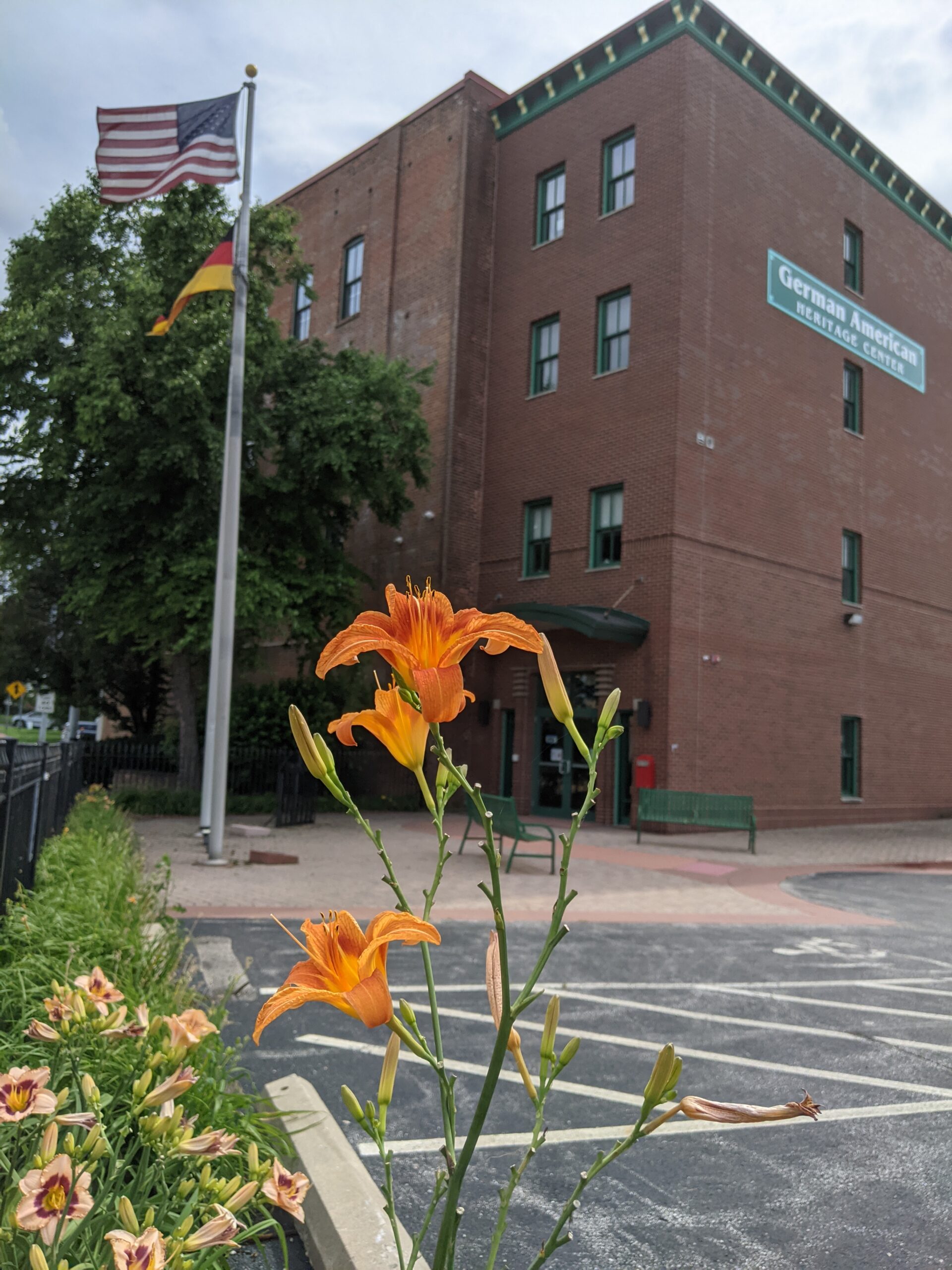
  • Our parking lot is on the north side of the building. It includes handicap accessible parking spaces.
  • The pathway leading to the entrance is fully handicap accessible as well.
Wheelchair Accessibility
  • Wheelchairs are available for those that need them at no cost.
  • All museum spaces are accessible by wheelchair.
Elevator Access
  • Each floor is accessible by elevator.
Restrooms
  • The museum contains 2 restrooms each on both the 1st and 4th floors.
  • All restrooms are handicap accessible.
  • The 4th floor restrooms are both gender neutral.
Hearing
  • English subtitles are featured in all of the museum’s video content.
  • German subtitles are also available in the introductory video of the permanent exhibit.
Sensory Kits
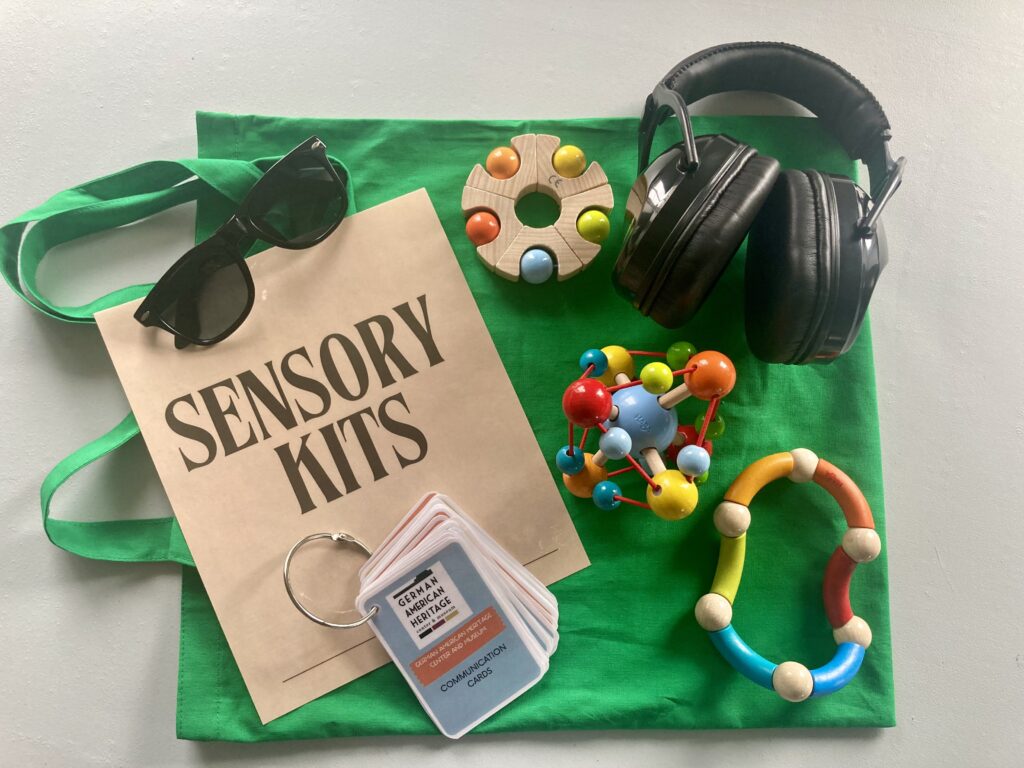
  • Sensory kits for children with sensory sensitivities can be checked out at the Front Desk.  The goal of the kits is to provide children with such sensitivities resources that help to ensure a better experience at the museum. 
  • The kits include headphones, sunglasses, communication cards (for non-verbal children) and a fidget toy. Each kit has a different wooden fidget toy made by HABA (a German toy company). 
  • This project was supported by a grant from The American Legion of Iowa Foundation.


Low Income Options
  • The GAHC&M is a proud participant of the Museums for All initiative. Through Museums for All, those receiving food assistance (SNAP benefits) can gain free or reduced admission to the GAHC&M simply by presenting their EBT card and a photo ID.


Seasonal Tours and ASL Tours
  • The GAHC&M offers free docent guided tours accompanied by an ASL interpreter. These tours are held quarterly throughout the year.
  • ASL Tours can also be scheduled by appointment.
  • For more information about the quarterly ASL tours or to schedule a tour please contact Aaron Baker at 563-322-8844 ext. 105 or [email protected].
  • ASL tours are available through a grant from the Regional Development Authority.

Regional Development Authority (Quad Cities) logo

Service Animals
  • Service animals are the only animals allowed in the museum at any time. Service animals are dogs that are trained to perform tasks for the benefit of an individual with a disability. This can include a physical, sensory, psychiatric, intellectual or other mental disability. Tasks performed by the animal may include pulling a wheelchair, retrieving dropped items, alerting a person to a sound, pressing elevator buttons or a variety of other tasks. The work performed by a service animal must be directly related to the individual’s disability. This does not include Therapy animals.
ON INSTAGRAM
  • Follow Us!

German American Heritage Center and Museum

germanamericanheritagecenter

1,374 1,724

Museum exploring the German immigrant experience and history of Davenport and Iowa!

Open
In honor of International Women's Day, here are some influential German women and their lasting impact:

Dorothea Erxleben (1715-1762): First female doctor of medicine in Germany, she challenged the societal norms of her time and paved the way for women’s advancement in education and rights.

Ricarda Huch (1864-1947): Pioneering German intellect and the first woman to earn a doctorate in philosophy from the University of Zurich.

Käthe Kollwitz (1867-1945): German artist who used emotionally powerful, realist printmaking to depict poverty, war, and the struggles of workers and women, becoming a pioneering female member of the Prussian Academy of Arts and an enduring voice for social justice through art.

Hanna Reitsch (1912-1979): Pioneering female aviator who set multiple world records, became a prominent figure in military aviation, and later established a gliding school in Ghana.

Hildegard Knef (1925-2002): Pioneering German actress, singer, writer whose bold work helped reshape post-war German culture and gave voice to women’s experiences.

Anne Frank (1929-1945): Became a powerful symbol of resilience and the human spirit, shaping literature, education, and the world’s understanding of the Holocaust.

Christa Luding-Rothenburger (1959-Present): Made history by achieving winning medals in both the Summer and Winter Olympic Games in the same year. 

These women challenged the limits placed on women in their eras, inspiring others and paving the way for future generations. Who are some women who inspire you? 🇩🇪

PHOTO: A poster for the 9th International Women's Day observance in Germany, 8 March 1914. This poster, by Karl Maria Stadler, demanding voting rights for women, was banned in the German Empire. (Public domain)

In honor of International Women`s Day, here are some influential German women and their lasting impact:

Dorothea Erxleben (1715-1762): First female doctor of medicine in Germany, she challenged the societal norms of her time and paved the way for women’s advancement in education and rights.

Ricarda Huch (1864-1947): Pioneering German intellect and the first woman to earn a doctorate in philosophy from the University of Zurich.

Käthe Kollwitz (1867-1945): German artist who used emotionally powerful, realist printmaking to depict poverty, war, and the struggles of workers and women, becoming a pioneering female member of the Prussian Academy of Arts and an enduring voice for social justice through art.

Hanna Reitsch (1912-1979): Pioneering female aviator who set multiple world records, became a prominent figure in military aviation, and later established a gliding school in Ghana.

Hildegard Knef (1925-2002): Pioneering German actress, singer, writer whose bold work helped reshape post-war German culture and gave voice to women’s experiences.

Anne Frank (1929-1945): Became a powerful symbol of resilience and the human spirit, shaping literature, education, and the world’s understanding of the Holocaust.

Christa Luding-Rothenburger (1959-Present): Made history by achieving winning medals in both the Summer and Winter Olympic Games in the same year.

These women challenged the limits placed on women in their eras, inspiring others and paving the way for future generations. Who are some women who inspire you? 🇩🇪

PHOTO: A poster for the 9th International Women`s Day observance in Germany, 8 March 1914. This poster, by Karl Maria Stadler, demanding voting rights for women, was banned in the German Empire. (Public domain)
…

Open
Behind the scenes of our Violins of Hope installation! Now open, this exhibition showcases violins that have a connection to Jewish musicians connected to the Holocaust. Through these instruments, we learn about the unique experiences of their owners, if they are known. 
Visit the museum now through April 26th to see the Violins of Hope on display.
📍 712 W Second St. Davenport, Iowa

Behind the scenes of our Violins of Hope installation! Now open, this exhibition showcases violins that have a connection to Jewish musicians connected to the Holocaust. Through these instruments, we learn about the unique experiences of their owners, if they are known.
Visit the museum now through April 26th to see the Violins of Hope on display.
📍 712 W Second St. Davenport, Iowa
…

Open
The Violins of Hope is a state-wide commuinty collaboration to honor and preserve the stories of those impacted by the Holocaust. For many musicians, their violins were their key to survival. By playing in orchestras and in camps, Jewish violinists were kept alive for their ability to provide music. 

We will have several violins on display with the stories of their owners at the German American Heritage Center and Museum in Davenport, Iowa through April 26th. For more information and other exhibitions and events, visit www.violinsofhopeiowa.com

The Violins of Hope is a state-wide commuinty collaboration to honor and preserve the stories of those impacted by the Holocaust. For many musicians, their violins were their key to survival. By playing in orchestras and in camps, Jewish violinists were kept alive for their ability to provide music.

We will have several violins on display with the stories of their owners at the German American Heritage Center and Museum in Davenport, Iowa through April 26th. For more information and other exhibitions and events, visit www.violinsofhopeiowa.com
…

Open
Happy Birthday, Jacob Strasser!

Born on February 22, 1831, Strasser immigrated to New Orleans with his family at the age of ten and ultimately settled in Davenport in 1851. His love of music played a key role in shaping German musical culture in the city. Around 1855, the Strasser Band emerged, featuring Strasser and several other local musicians. Frequently performing at picnics, street parades, and community events, the band thrived throughout the decade. Associated with the Iowa National Guard, the Strasser Band grew in popularity and traveled around the region to perform at special occasions, including the 1893 World’s Fair in St. Louis.

As the band’s reputation expanded, its musical influence helped lay the groundwork for the creation of the Quad City Symphony Orchestra (originally known as the Tri-City Symphony) in 1916. Remarkably, this symphony developed in what was then the smallest community in the United States able to sustain a full orchestra, a lasting testament to the strong musical culture that Strasser helped to foster.

We have some Strasser's Band artifacts on display in our current exhibition, "Play On! German Influence on QC Music History," on display through August 2nd, 2026.

Happy Birthday, Jacob Strasser!

Born on February 22, 1831, Strasser immigrated to New Orleans with his family at the age of ten and ultimately settled in Davenport in 1851. His love of music played a key role in shaping German musical culture in the city. Around 1855, the Strasser Band emerged, featuring Strasser and several other local musicians. Frequently performing at picnics, street parades, and community events, the band thrived throughout the decade. Associated with the Iowa National Guard, the Strasser Band grew in popularity and traveled around the region to perform at special occasions, including the 1893 World’s Fair in St. Louis.

As the band’s reputation expanded, its musical influence helped lay the groundwork for the creation of the Quad City Symphony Orchestra (originally known as the Tri-City Symphony) in 1916. Remarkably, this symphony developed in what was then the smallest community in the United States able to sustain a full orchestra, a lasting testament to the strong musical culture that Strasser helped to foster.

We have some Strasser`s Band artifacts on display in our current exhibition, "Play On! German Influence on QC Music History," on display through August 2nd, 2026.
…

Open
🎆 In 2026, we celebrate the semiquincentennial (250) of the United States! Follow along as we highlight influential German immigrants throughout the history of the United States.

In 1683, thirteen German Mennonite, Quaker, and Pietist families led by Franz Daniel Pastorius (September 26, 1651 – February 17, 1719), crossed the Atlantic in search of religious freedom. Together, they purchased 43,000 acres in Pennsylvania and founded Germantown, a small community north of Philadelphia, now part of the city itself.

These settlers brought with them deep farming traditions and craftsmanship that quickly earned admiration in the colonies. Under Pastorius’s leadership, the community also took a remarkable moral stand: they issued the first known protest against slavery in America, condemning it as unjust and banning it within their settlement.

Their settlement laid the foundation for centuries of German-American contributions to Pennsylvania and beyond.

Pictured: "A Quaker's Meeting," painting by Egbert von Heemskerk.
Pennsylvania Historical Commission Marker.

🎆 In 2026, we celebrate the semiquincentennial (250) of the United States! Follow along as we highlight influential German immigrants throughout the history of the United States.

In 1683, thirteen German Mennonite, Quaker, and Pietist families led by Franz Daniel Pastorius (September 26, 1651 – February 17, 1719), crossed the Atlantic in search of religious freedom. Together, they purchased 43,000 acres in Pennsylvania and founded Germantown, a small community north of Philadelphia, now part of the city itself.

These settlers brought with them deep farming traditions and craftsmanship that quickly earned admiration in the colonies. Under Pastorius’s leadership, the community also took a remarkable moral stand: they issued the first known protest against slavery in America, condemning it as unjust and banning it within their settlement.

Their settlement laid the foundation for centuries of German-American contributions to Pennsylvania and beyond.

Pictured: "A Quaker`s Meeting," painting by Egbert von Heemskerk.
Pennsylvania Historical Commission Marker.
…

Open
💝 Valentine’s Day is a relatively new tradition in Germany, compared to places like England or France, where romantic customs around February 14 developed much earlier. For centuries, German-speaking regions focused more on religious feast days and local folk traditions than on St. Valentine as a patron of lovers. Romantic Valentine customs started to appear in Germany only in the late 19th and early 20th centuries, influenced by British and American fashions like printed cards and heart-shaped sweets. The real boom came after World War II, when American, British, and French troops stationed in Germany brought over their Valentine’s cards, chocolates, and “day of love” marketing. From the 1950s onward, German florists, chocolatiers, and card companies leaned into the holiday, helping it spread through shops, advertising, and later television and social media.

💐 Today, “Valentinstag” in Germany looks familiar: many couples exchange flowers, chocolates, and small gifts or go out for a quiet dinner, though the day is often less flashy and more low-key than in the United States. Its growth is a clear example of cultural exchange, showing how a once-local European saint’s day became a global celebration, reshaped as it moved between Britain, North America, and postwar Germany.

❤️ These Valentine cards are on display on our 4th floor, on loan from the American Doll and Toy Museum in Rock Island. Many of these vintage cards were elaborate, featuring pop-up elements, moving parts, or multi layered construction. Do you have any old Valentine cards? Share them with us in the comments!

💝 Valentine’s Day is a relatively new tradition in Germany, compared to places like England or France, where romantic customs around February 14 developed much earlier. For centuries, German-speaking regions focused more on religious feast days and local folk traditions than on St. Valentine as a patron of lovers. Romantic Valentine customs started to appear in Germany only in the late 19th and early 20th centuries, influenced by British and American fashions like printed cards and heart-shaped sweets. The real boom came after World War II, when American, British, and French troops stationed in Germany brought over their Valentine’s cards, chocolates, and “day of love” marketing. From the 1950s onward, German florists, chocolatiers, and card companies leaned into the holiday, helping it spread through shops, advertising, and later television and social media.

💐 Today, “Valentinstag” in Germany looks familiar: many couples exchange flowers, chocolates, and small gifts or go out for a quiet dinner, though the day is often less flashy and more low-key than in the United States. Its growth is a clear example of cultural exchange, showing how a once-local European saint’s day became a global celebration, reshaped as it moved between Britain, North America, and postwar Germany.

❤️ These Valentine cards are on display on our 4th floor, on loan from the American Doll and Toy Museum in Rock Island. Many of these vintage cards were elaborate, featuring pop-up elements, moving parts, or multi layered construction. Do you have any old Valentine cards? Share them with us in the comments!
…

Open
🏈 Did someone say football??

These postcards are from a 1914 game between the Rock Island Independents and the Moline Redmen. The Rock Island Independents were a founding franchise of the National Football League. They hosted the first NFL game on September 26, 1920, at Douglas Park in Rock Island, IL.  These photos were donated to the GAHC+M by Anita Purcell.

🍺 🇩🇪 If you have plans this Sunday or need a last-minute contribution to the Super Bowl Party, we've marked down our beers to $10 for a 4 pack. We have a variety of Paulaner beers and our custom Hefeweizen and Märzen brewed locally by Twin Span Brewing. Build your own combo and try them all!

🥒 We also have Sprecher root beer, cream soda, and cherry cola for NA options. If you're feeling snacky, we also have various German pickles, kraut, and Boetje's mustard!

✅ As a non-profit organization, all of our gift shop merchandise is tax-free. 

We are open Friday and Saturday 10 am - 4 pm  and Sunday 12 - 4 pm.

🏈 Did someone say football??

These postcards are from a 1914 game between the Rock Island Independents and the Moline Redmen. The Rock Island Independents were a founding franchise of the National Football League. They hosted the first NFL game on September 26, 1920, at Douglas Park in Rock Island, IL. These photos were donated to the GAHC+M by Anita Purcell.

🍺 🇩🇪 If you have plans this Sunday or need a last-minute contribution to the Super Bowl Party, we`ve marked down our beers to $10 for a 4 pack. We have a variety of Paulaner beers and our custom Hefeweizen and Märzen brewed locally by Twin Span Brewing. Build your own combo and try them all!

🥒 We also have Sprecher root beer, cream soda, and cherry cola for NA options. If you`re feeling snacky, we also have various German pickles, kraut, and Boetje`s mustard!

✅ As a non-profit organization, all of our gift shop merchandise is tax-free.

We are open Friday and Saturday 10 am – 4 pm and Sunday 12 – 4 pm.
…

Open
New workshop just added! 

Valentine Card Workshop Saturday February 14th at 11:00 am.

Join us on Valentine's Day for a fun opportunity to make your own Valentine Cards. Instructed by Rachael Mullins, draw inspiration from vintage Valentines and use the provided materials to create your own one-of-a-kind cards.

No experience needed! This would be a wonderful way to unplug, and spend time with a friend, partner, or family member creating something unique and festive.

Registration link in bio. Walk-ins welcome if there is space available.

Pictured: Valentine card from the GAHC+M collection. Pre-WWII, donated by Linda Foster. 2022.10.5F

New workshop just added!

Valentine Card Workshop Saturday February 14th at 11:00 am.

Join us on Valentine`s Day for a fun opportunity to make your own Valentine Cards. Instructed by Rachael Mullins, draw inspiration from vintage Valentines and use the provided materials to create your own one-of-a-kind cards.

No experience needed! This would be a wonderful way to unplug, and spend time with a friend, partner, or family member creating something unique and festive.

Registration link in bio. Walk-ins welcome if there is space available.

Pictured: Valentine card from the GAHC+M collection. Pre-WWII, donated by Linda Foster. 2022.10.5F
…

VISIT US

German American Heritage Center & Museum
712 W 2nd St.
Davenport, IA 52802

HOURS

Tuesdays – Saturdays open 10 am – 4 pm
Sundays open 12 – 4 pm
Closed Mondays

NEWSLETTER

This field is for validation purposes and should be left unchanged.
STAY CONNECTED
Instagram Facebook-f Twitter
Sign Up for our Newsletter
German American Heritage Center & Museum
712 W 2nd St.
Davenport, IA 52802
Tuesdays – Saturdays open 10 am – 4 pm
Sundays open 12 – 4 pm
Closed Mondays

Newsletter

Subscribe to get all latest news, updates.

This field is for validation purposes and should be left unchanged.